Monday, October 24, 2016

Blog for October 23

Overview of the week of 10/17-10/21:
Monday: We reviewed derivatives of exponential and logarithmic functions
Tuesday: PSAT day
Wednesday: NO class
Thursday: Chain rule/derivatives of logarithmic and exponential functions assessment
Friday: Started covering our last type of derivative (!!!), implicit differentiation (derivatives of non-functions)

Implicit differentiation- writing the derivative when y isn't alone, or when the equation can not be solved for y. An example of when implicit differentiation must be used is x2+y2=1

All year we have been finding the derivative of functions in respect to x (without knowing it)
When finding the derivative of an equation like y=x+1 we would find y'=1 or dy/dx= 1, where dy/dx is the derivative of y and 1 is the derivative of x+1.

Now that y is not always alone, and can be on both sides of the equal sign dy/dx has a much bigger role in our derivatives.

Now that we are finding derivatives of y terms that are more than just y (ex. y2, 3y, 17y2) dy/dx is always part of our equations, because it's part of the derivative of y.

When using implicit differentiation it is important to remember to always write dy/dx because it is part of the derivative of the y term
example: The derivative of x=4y is 1= 4(dy/dx)
  • 1 is the derivative of x
  • 4(dy/dx) is the derivative of 4y
Example from class:
The steps we took when solving this were:
  1. Take the derivative
  2. Collect dy/dx terms on one side of the = (anything else should be moved to the other side)
  3. Factor out dy/dx
  4. Divide to get dy/dx alone on one side of the =
**Helpful hint: distributing almost always makes these problems easier

Here is another example from class. This problem involves more than just finding the derivative of an equation: 


Implicit differentiation can also be used to find the second derivative of an equation.
  1. Find the first derivative normally, using implicit derivation 
  2. Find the second derivative (almost always involves the quotient rule)
Here is an example from class:

**Don't forget: when writing the second derivative dy/dx becomes d2y/dx2


Sunday, October 16, 2016

Blog for October 16

Overview
This week's material focused on the eighth derivative rule regarding derivatives of exponential and logarithmic functions with introduction to the number e. The material also introduced derivatives of inverse trigonometric functions.
RULE #8 - Derivatives of Exponential and Logarithmic Functions

Derivatives: "e" as an Exponential Function
In the exponential section of derivatives, we were introduced to the numerical value e. The derivative of e in an exponential function will always equal itself, as written below.

  • dy/dx (ex) = ex

Applying "e" to Several Derivative Rules

*Product Rule


*Quotient Rule
Displaying FullSizeRender.jpg

*Chain Rule
Displaying FullSizeRender.jpg

--------------------------

Derivatives: Exponential Functions with Values Other than "e"
The derivative of an exponential function that is not ex (i.e. ax) is:

  • dy/dx (ax) = ln (a) * ax

*Proving the Derivative Formula


"a" is only representative of a value. Numerical values can be substituted for this variable, and the same steps can be followed to find the derivative. An example of this process with numerical values is listed below.

*Derivative of an Exponential Function Other Than "e"Displaying FullSizeRender.jpg

--------------------------

Derivatives: Natural Log Functions
The derivative for natural log functions is given and proven as listed below:

  • dy/dx [ln(x)] = 1/x
*Proving the Derivative Formula
Displaying FullSizeRender.jpg

Now we can apply this formula to natural logs of numerical values opposed to only working with variables.

*Derivative of a Natural Log Function
Displaying FullSizeRender.jpg


--------------------------

Derivatives: Logarithmic Functions
Logarithmic functions have a derivative formula that follows the format listed below:
  • dy/dx [loga(x)] = 1/ln (a) * x
*Derivative of a Logarithmic Function
Displaying FullSizeRender.jpg

--------------------------

Derivatives of Inverse Trig Functions

Aside from working with exponential and logarithmic functions, this week's material encompassed an introduction to derivatives of inverse trig functions for sine, cosine, and tangent. Each of these trig functions has a specific derivative formula.

Derivatives: Inverse Sine
The derivative formula for finding the derivative of inverse sine is provided below with an example highlighting how the formula can be applied. 
  • dy/dx [sin-1(x)] = 1/√(1-x2)
*Derivative of Inverse Sine Function
Displaying FullSizeRender.jpg


--------------------------

Derivatives: Inverse Cosine
The formula for the derivative of inverse cosine varies slightly in comparison to the formula for the derivative of inverse sine. One important thing to note is that inverse cosine is negative and inverse sine is positive. Remember this to avoid using the wrong formula. 
  • dy/dx [cos-1(x)] = -1/√(1-x2)
*Derivative of Inverse Cosine Function
Displaying FullSizeRender.jpg


--------------------------

Derivatives: Inverse Tangent
Finally, the derivative formula for the inverse of tangent follows:
  • d/dx [tan-1(x)] = 1/1+x2
*Derivative of Inverse Tangent
Displaying FullSizeRender.jpg


--------------------------

FINAL TIPS

Don't forget several log properties that are important to use:
  • ln(ab) = ln(a) + ln(b)
  • ln(a/b) = ln(a) - ln (b)
  • ln(ax) = x * ln(a)


    Monday, October 10, 2016

    Blog for October 10

    Overview-
    This week in class we focused primarily on the Chain Rule. It is the 7th rule of derivatives and is one of the most important.

    Equation-


    Application-
    Every time there is a function nested inside of another function the chain rule is extremely useful. It is used to link parts of equations together and for differentiating complicated equations. It allows people to take derivatives of much more complex problems.

    Explanation-
    To take the derivative you have to look at the most outside function, usually an exponent. Just pretend that the inside is just an x as usual and take the derivative and leave the inside portion unchanged, but still copy it down. Then multiply that answer by the derivative of the stuff on the inside that you previously ignored. That is the basics of the rule, but this process may have to be repeated depending on the extent of the problem.


    Practice Problems- 


    Using the Rule Twice in Same Problem-


    Finding dr/d(theta)


    More Complicated Problem-


    Using Values From a Table-


    Tips-
    - Always work from the outside in
    - Anytime there is a nested function, think to use the chain rule


    Sunday, October 2, 2016

    Blog for October 2nd

    This week in Calculus we continued working on derivatives. We learned about position, velocity, speed, acceleration, and higher order derivatives. We also learned the four remaining derivative rules.


    Position, Velocity, Speed, Acceleration:


    Important Points:

    • Velocity is first derivative (slope of position), acceleration is second derivative (slope of velocity)
    • To find average velocity, find slope of secant line
    • To find instantaneous velocity, find derivative

    Derivative Rules:
    1.

    This can be proved by:


    2.

    This can be proved by:


    3.

    This can be proved by:


    4.
     
    This can be proved by:


    Practice Problems Using these Rules:
    1.


    2.

    Sunday, September 25, 2016

    Blog for September 25th

    This week in Calculus we worked on the Derivative Rules. Below are some detailed notes about all six of the rules that we learned this week that make finding derivatives easier.

    1.) The Power Rule

    The Power Rule was the most important rule that we learned this week, and this rule explained how to find the derivative of a function instead of using the limit rules. In short, the Power Rule uses the equation for a derivative function to prove that there is an easier and faster way to find the derivative of a function.
    Above is an explanation as to how we got the formula f '(x)=nx^n-1

    This is an example of the Power Rule.

    2.) The Constant Multiple Rule

    This rule means that if there is a constant in front of the x, then you will multiply the constant by the exponent.

     This is an example of the Constant Multiple Rule.

    3.) The Sum and Difference Rule

    We would use this rule if the function was a polynomial for example, or if it had a constant. This rule states that adding multiple functions together would be the same as adding the derivatives of the same functions together, and the same goes for subtraction.

       This is an example of the Sum and Difference Rule.

    4.) Derivative of y= sin(x) and y= cos(x)

    We use the derivative of sine and cosine graphs to determine what the derivative graphs would look like for some of our trig functions. We found that the derivative graph of sine is cosine and the derivative graph of cosine is negative sine.
       Here are the graphs proving the rule.

        Here are some examples of the rule.

    5.) The Product Rule

    The Product Rule gives us an equation on how to find the derivative when there are two functions multiplied by each other. The equation would be the first function multiplied by the derivative of the second function plus the second function multiplied by the derivative of the first.


        Here is an example of the product rule.

    6.) The Quotient Rule

    The Quotient Rule gives us an equation for finding the derivative of two functions divided by each other.

        Here is an example of the Quotient Rule.

    * One great tool to learn to help you memorize the Quotient Rule is:

    low, D high; high, D low/low squared

    D represents the derivative of and low means the bottom function and high represents the top function.


    Friday, September 23, 2016

    Weekly Wrap Up, 9/18

    These are the major calculus concepts covered during our first week of class.

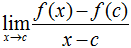
    1. The derivative of a function refers to the slope of a line drawn tangent to a function at a particular point.  In order to find the value of the derivative of a function at a particular x-value, you can use the following limit definition:

    This definition starts by finding the slope of a secant line between x = a, the point where you want to find the derivative, and some other point on the function.  Then, by taking the limit as x approaches a, we are able to consider what happens when the two points become infinitely close together, turning the secant into a tangent.


    2. It is also possible to find a formula for the derivative of a function at any point.  This is know as the derivative function.  The limit definition of the derivative function is:


    This is the major definition for the derivative you should know.

    3. You can find the equation of a tangent line to a function at a certain x-value if you know the y-value and the derivative of a function as a certain x-value.

    For example, if f(2) = 5 and f'(2) = -3, then the equation of the tangent line (in point slope form) is

    y - 5 = -3(x - 2)

    4. A normal is a line perpendicular to a tangent at a particular point.  The process for writing the equation of a normal is the same as writing the equation for a tangent, except that once you find the slope of the tangent, you need to take the negative reciprocal of the tangent slope to find the slope of the normal.  So, if f'(2) = -3, then the slope of the normal is 1/3.

    5. The slopes of an original function f(x) translate into y-values on the graph of a derivative f'(x). 

    This means:

    • When the graph is increasing, the derivative graph is above the x-axis
    • When the graph is decreasing, the derivative graph is below the x-axis
    • When the graph has a min, max, or some other kind of horizontal tangent, the derivative graph will have a zero/x-intercept.